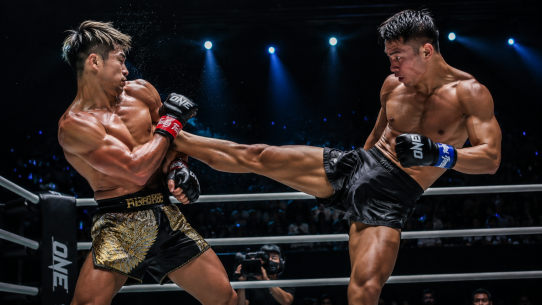


On Saturday, August 29, the Kia Center in Orlando will host a combat sports card that doesn’t fit neatly into any existing category. It isn’t a UFC event, it isn’t a boxing promotion, and it isn’t quite an influencer show either. It’s called Duel: Arena, and the most interesting thing about it may not be the fights at all — it’s who is putting them on.
A Betting Brand Steps Out From Behind the Logo
Duel: Arena is the debut event of a promotion owned and run by Duel, the crypto casino and sportsbook that operates at Duel.com. (Several combat sports outlets covering the announcement referred to the operator as “DuelBet”; the brand itself trades as Duel.) That’s a meaningful shift. Gambling money has been flowing into combat sports for years, but almost always through the side door: cage sponsorships, logos on shorts, banners behind the podium at press conferences. Here the operator isn’t renting space on someone else’s product. It owns the product — the name, the marketing, the media rights, the matchmaking budget.
The show is being assembled by Dean Toole, a veteran MMA matchmaker, who has framed the launch as the start of something ongoing rather than a novelty one-off. That ambition is worth taking at face value, at least as a stated plan. Single-event promotions rarely bother to number their cards, and this one is already being listed as Duel Arena 1.
The Main Event: Perry vs. Danis
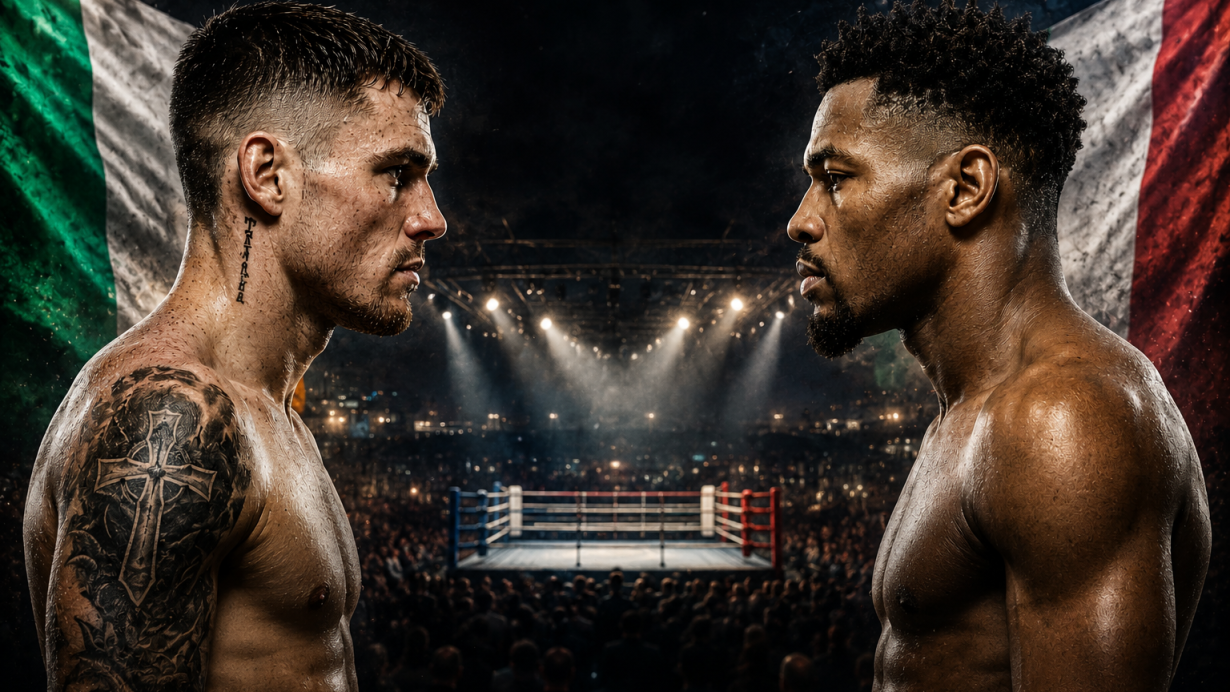
Topping the bill is a welterweight MMA fight between Mike “Platinum” Perry and Dillon “The Mad Samurai” Danis — a matchup that has been threatened, teased, and argued about on social media for years without ever getting made.
Perry is the more accomplished fighter of the two by a wide margin, and he’s fighting in his adopted hometown. He left the UFC in 2021 and reinvented himself in bare-knuckle boxing, where he put together an unbeaten run, stopped former world champions, and picked up BKFC’s “King of Violence” trophy. He boxed Jake Paul in 2024 and lost by sixth-round stoppage. Then, in May of this year, he returned to MMA rules for the first time since his UFC exit and beat Nate Diaz on MVP MMA’s Netflix card, with Diaz’s corner pulling him out after the second round.
Danis arrives from a different direction entirely. He’s a legitimate Brazilian jiu-jitsu black belt with a real competitive grappling pedigree and a long association with Conor McGregor’s camp. His actual fighting résumé is thin: two catchweight bouts under Bellator in 2018 and 2019, a 2023 boxing match against Logan Paul that ended in disqualification when he abandoned boxing entirely and went for a takedown and a choke, and a quick submission win over Warren Spencer in a bout whose classification — professional or exhibition — depends on which database you consult.
That gap in experience is reflected in the early betting and fan predictions, which lean heavily toward Perry. It’s also the honest tension in the fight. Danis has built a career on being talked about rather than on winning, and the case for him here rests almost entirely on the grappling: if he gets to Perry’s back or a leg early, the picture changes fast. If he doesn’t, this is a fight between a pressure fighter with genuine knockout power and a man who has fought under MMA rules roughly three times in eight years.
Ring, Not Cage
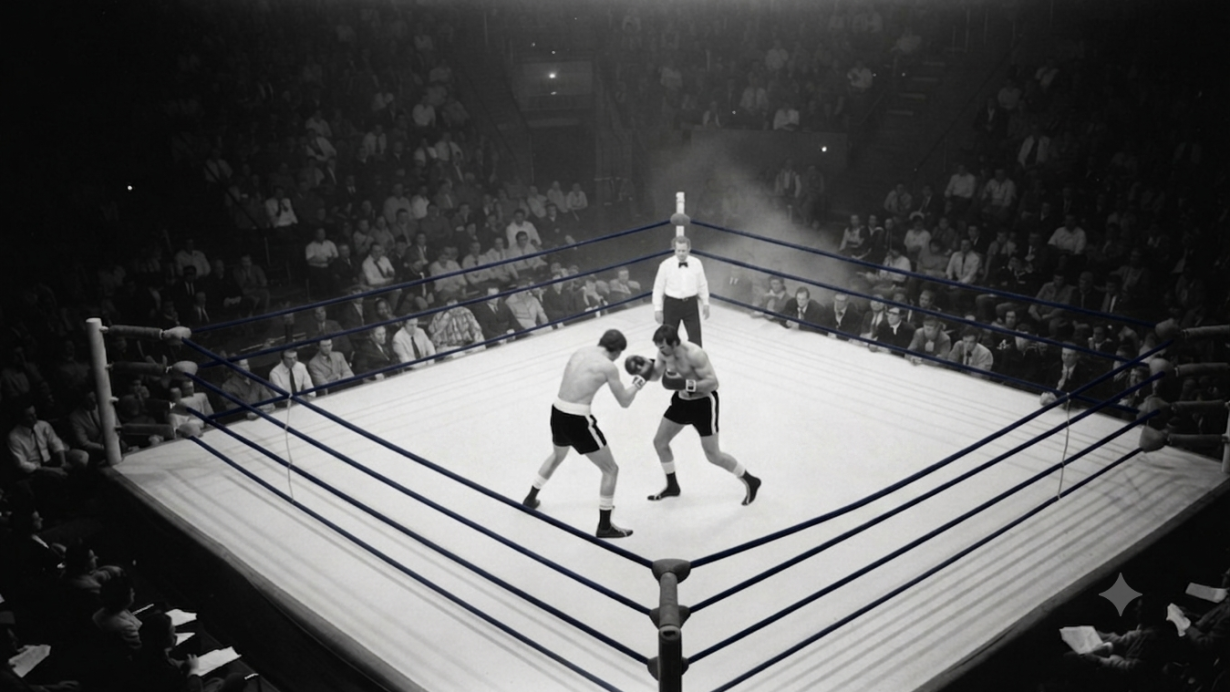
One structural detail sets this card apart from almost everything else on the calendar: the fights will take place in a ring, not a cage. That includes the MMA bouts.
This is not a cosmetic choice. Cage walls are a tool — fighters use them to trap opponents, to wall-walk back to their feet, to stall out a scramble. A ring removes all of that and adds ropes, corners, and the constant possibility of fighters tangling or falling out. MMA has been contested in rings before, most famously in PRIDE, and the result was a noticeably different sport: more open space, more grappling exchanges that reset, more chaos when someone ends up under the bottom rope.
For a card mixing MMA with boxing and kickboxing, the ring is also a practical decision — one setup, one production look, no reconfiguring the floor between disciplines. But it does mean the main event will be fought under conditions neither man has much recent experience with.
Gypsy vs Jew
The second announced bout is a heavyweight kickboxing match between Paul Miller, who streams under the alias “Gypsy Crusader,” and Ben Azoulay, a TikTok personality who fights on influencer cards.
Miller’s public profile is not incidental to his booking; it is his booking. He built an audience through video-chat streams in which he appeared in costume and directed racist and antisemitic abuse at strangers. He later pleaded guilty to unlawful possession of a firearm and ammunition and served 41 months in federal prison. He made his boxing debut in March of this year on an Adin Ross-promoted card in Miami, winning a split decision that the arena crowd and the broadcast team openly disputed. He is also, by his own account, a sponsored Duel athlete.
The criticism from inside the sport has been direct and easy to summarize: putting a figure whose entire brand is racist content into a major arena on a professional card gives that brand a mainstream stage and a paying audience. That criticism is not fringe — the announcement drew public pushback from working fighters and cornermen, including some who have fought for major promotions.
It’s worth stating plainly rather than burying in a preview: this is the part of the card that will define how the promotion is remembered, regardless of how the main event goes.
An Undercard Still Taking Shape
As of now, most of the card remains unannounced. Toole has indicated that the lineup will fill out with a mix of influencer bouts and former UFC fighters. There’s also an unresolved question about co-promotion — early ticketing pages carried the Gamebred Fighting Championship logo, which points toward involvement from Jorge Masvidal’s promotion, though nothing has been formally confirmed. Weigh-ins are expected the day before.
Round counts and the running order haven’t been published either, which is unusual this close to fight week and suggests the matchmaking is still moving.
The Conflict-of-Interest Question
There’s a governance issue here that deserves more attention than it’s getting. When a sportsbook promotes the event, controls the matchmaking, and books fighters it also sponsors, the separation between the party running the contest and the party taking bets on it becomes thin.
Regulated combat sports handle this with commission oversight — Florida’s athletic commission will sanction the professional bouts — but sanctioning covers medicals, licensing, and officiating, not commercial structure. For viewers outside the US in particular, it’s worth being clear-eyed that a crypto casino’s promotional content is marketing, and that the consumer protections attached to licensed gambling in one jurisdiction don’t travel with a stream.
The Practical Details
- What: Duel Arena 1 — Perry vs. Danis
- When: Saturday, August 29, 2026. The main card is listed for 8:00 p.m. ET, with an earlier local start reported for the full event.
- Where: Kia Center, Orlando, Florida
- Format: Hybrid card — MMA, boxing and kickboxing, all contested in a ring
- Main event: Mike Perry vs. Dillon Danis, welterweight (170 lbs), three five-minute rounds
- Tickets: On sale since July 28 via Ticketmaster
- Broadcast: Not yet announced at time of writing
What August 29 Actually Tests
Two separate things are being tested that night, and they’re worth keeping apart.
The first is sporting: can Danis do anything with the grappling advantage that is his only real path to winning, against a fighter who hits hard and moves forward? Three rounds is not long for a specialist to find his moment.
The second is commercial: whether a gambling brand can build a durable live sports property rather than a one-night marketing spend. The Perry-Danis fight will sell tickets on its own. What happens after — whether there’s a Duel Arena 2, whether the fighter pool broadens beyond internet grudge matches, whether the promotion decides that bookings like the co-feature are worth the reputational cost — is the part that will actually answer the question.