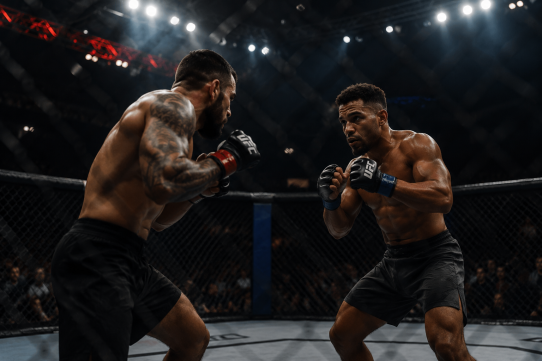
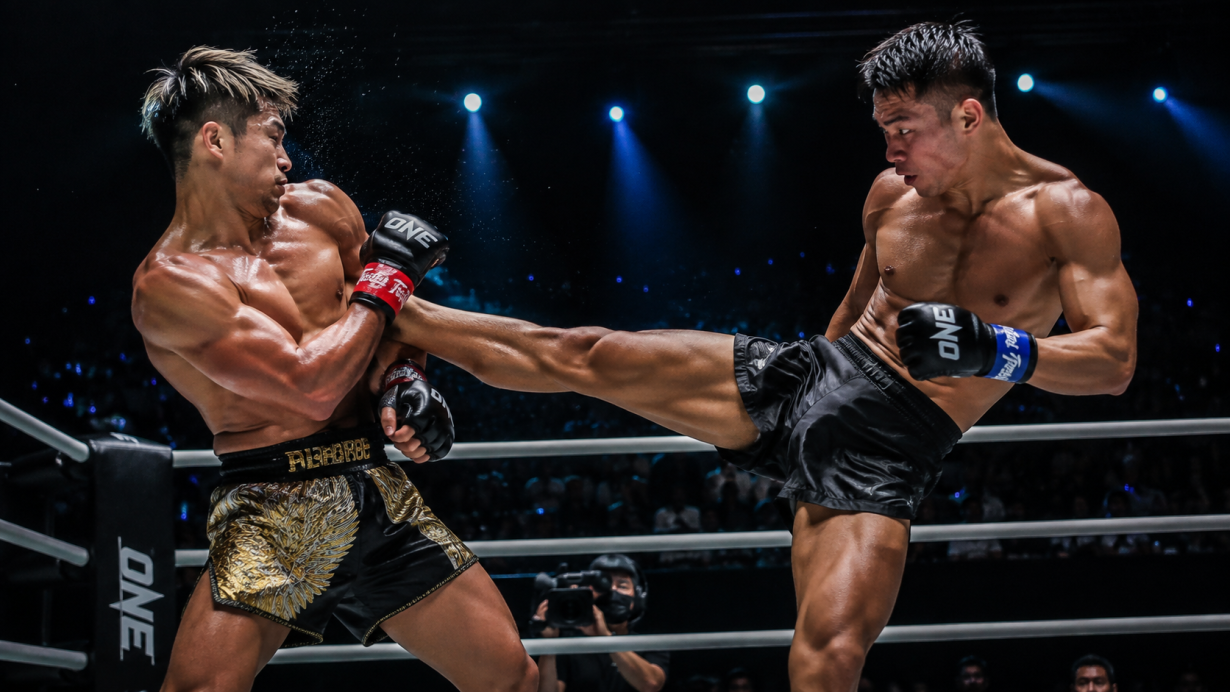
Rematches are the most honest fights in combat sports. There’s no mystery to sell, no “styles make fights” hand-waving — one man already solved the puzzle, and the other has had months to figure out why he couldn’t.
That’s what makes Saturday night in Tokyo worth clearing your calendar for. ONE Championship returns to the EBARA WAVE Arena Ota on August 8 for ONE Samurai 2, the second instalment of its new monthly Japanese series, and the main event is Masaaki Noiri finally getting his hands on Liu Mengyang again. It’s a quarterfinal. It’s also, realistically, the fight that decides which of them still has a career trajectory pointing upward.
The Series That Gave Japan Its Own Room
Before we get to the fighting, a word on the format, because it matters.
ONE Samurai 1 landed in April and did something the promotion had been circling for years: it gave Japan a dedicated, recurring platform instead of the occasional mega-card. The sequel doubles down. Nine bouts, a mix of kickboxing and MMA, a card built almost entirely around Japanese talent with a handful of imported problems flown in to test them.
At the centre of it is the ONE Samurai Featherweight Kickboxing Tournament — an eight-man bracket whose winner gets a guaranteed shot at reigning ONE featherweight kickboxing champion Superbon. Not a “we’ll see how it goes” shot. A guaranteed one.
That’s a smart bit of matchmaking. The featherweight kickboxing division has been jammed up for the better part of a year, with contenders stacked behind each other and nobody able to say definitively who’s next. A tournament settles arguments. Three of the four quarterfinals happen on Saturday’s card; the fourth already went down the night before in Bangkok.
Noiri’s Problem Has a Name
Masaaki Noiri’s ONE run is one of the odder redemption arcs in modern striking. He arrived as one of the most decorated Japanese kickboxers of his generation and promptly lost his first two fights in the promotion — including a decision to Liu Mengyang at ONE Friday Fights 92 back in 2024, a fight in which he was also dropped.
That should have been the end of the story. Instead he rebuilt, won the interim featherweight kickboxing title, and earned a unification bout with Superbon at ONE 173 in November at Ariake Arena. He went the full five rounds with the undisputed champion and lost a unanimous decision. Not a blowout. Not a coronation either.
So here’s Noiri at a genuine crossroads: he’s proven he belongs at the top of the division and equally proven he hasn’t yet cracked it. The stuff he’s been drilling since that November camp gets its first live examination against the one man in the bracket who has already beaten him — and beaten him convincingly enough that nobody in Japan has forgotten the knockdown.
Home crowd, national television, a bracket that leads straight back to the champion who just outpointed him. If Noiri loses this one, the conversation about him changes permanently.
Liu Mengyang Is Not a Stepping Stone
The Chinese contender’s nickname is “Spirit Dragon” and the thing that stands out watching him is his composure in exchanges. He doesn’t panic when someone comes forward, he doesn’t waste output, and he has the kind of timing on counters that turns aggressive opponents into highlight footage.
He’s also arguably the hottest fighter in the division outside the champion. He’s ridden a winning run into this rematch and dismantled Gabriel Pereira at The Inner Circle in May — a fight he took after Superbon withdrew injured and his own title shot evaporated.
That last detail is the one I’d chew on if I were him. Liu was, by most reasonable readings, next in line. Then the champion got hurt, the shot vanished into scheduling limbo, and now he has to win three fights in a tournament to get back to where he already was. That’s either a fighter with a chip on his shoulder or a fighter whose best moment has already passed. Saturday tells us which.
How This One Probably Goes
The first fight gave us the blueprint: Liu was the sharper counter-puncher, caught Noiri coming in, and banked rounds without ever needing to chase.
For Noiri to flip it, he has to change the geography. Volume alone won’t do it — throwing more into a good counter-striker is how you get dropped a second time. What he needs is body work and low kicks to slow Liu’s feet, and a jab that establishes range before the power shots arrive rather than after. Noiri has always been at his best when he’s making the fight ugly and continuous instead of trading in clean, spaced-out exchanges. Clean exchanges are Liu’s office.
Liu’s path is simpler: stay disciplined, let the crowd noise pull Noiri into something reckless, and punish it. He doesn’t need to win a war. He needs to win three rounds.
I lean Noiri, narrowly, mostly on the Superbon experience and the fact that fighters who go twenty-five hard minutes with a champion usually come back with something new. But I wouldn’t put money on it, and a repeat of the first result would surprise nobody.
Kaito vs. Siasarani: The Other Score to Settle
The co-main is the same movie with different actors.
Kaito Ono — multiple-time K-1 champion, former two-division SHOOT BOXING titleholder — has had a rough introduction to the global stage. Mohammad Siasarani ruined his promotional debut at ONE Friday Fights 109 by simply refusing to stop walking forward, drowning him in pressure and volume. Kaito then ran into Marat Grigorian at ONE Samurai 1 in April and was stopped inside the opening round.
Two fights, two bad nights, and a résumé at home that says he’s better than that. This is about as close to a must-win as a non-title fight gets.
Siasarani, meanwhile, might be the most quietly terrifying man in the bracket. The Iranian racked up eight wins on the weekly Friday Fights circuit, earned a six-figure contract by knocking out Jo Nattawut, and then survived an absolute war with Pedro Dantas on his main roster debut. He has beaten both Kaito and Liu Mengyang. He is also, by some distance, the least discussed name in this tournament, which tells you more about the promotion’s marketing priorities than about his ability.
The Rest of the Bracket
The third quarterfinal on Saturday’s card pairs Japan’s Kosuke “Unstoppable Phoenix” Takagi with China’s Luo Chao — the least heralded matchup of the four and the one most likely to produce a surprise semifinalist.
The fourth already happened. Marat Grigorian faced Mamuka Usubyan at The Inner Circle 25 in Bangkok on Friday night, one day before Tokyo. Grigorian is the wildcard in all of this: three-time Glory champion, 70-14 as a professional, riding a three-fight surge that includes that first-round demolition of Kaito. He’s also fought Superbon three times, famously flattening him in 29 seconds outside ONE back in 2018 before dropping two decisions inside the promotion.
If Grigorian gets through the bracket, ONE has a fourth Superbon fight on its hands and a genuinely great story attached to it.
One absence worth noting: the Rukiya Anpo rematch Japanese fans have been waiting on isn’t happening yet. Anpo moved up to lightweight after missing weight badly ahead of his ONE debut against Grigorian, which parks that collision for another day.
The Undercard Isn’t Padding
Keito “Pocket Monk” Yamakita against newcomer Koyuru Tanoue is the fight I’d tell casual viewers to actually watch. Yamakita is 5-1 in the promotion with a suffocating grappling style and wins over former strawweight champions Alex Silva and Yosuke Saruta. He submitted Ryohei Kurosawa at ONE Samurai 1 and is riding a four-fight streak. Another dominant showing likely puts him next for Joshua Pacio’s strawweight title.
Beneath that: Ayumu Yamamoto vs. Ryo Hirayama at bantamweight MMA, Subaru Mori vs. Yusuke Sato at lightweight MMA, and a run of domestic kickboxing bouts — Shoma Okumura vs. Reiji, Hiroki Kasahara vs. Ryuto Shiokawa, Ranma vs. Katsuki Kitano.
How to Watch
ONE Samurai 2 goes out to more than 195 countries on Saturday, August 8. The opening two bouts stream free on ONE’s YouTube channel, its Facebook page, and live.onefc.com starting at 5:30pm JST (4:30pm in Hong Kong, Singapore and Malaysia; 3:30pm ICT). After the second fight, the rest of the card moves exclusively to live.onefc.com. Japanese viewers get the whole thing on U-NEXT. Tickets, if you’re in Tokyo, are still going through Pia and Zaiko.
The Picks
Noiri by decision. Close, contested, probably slightly controversial. The home crowd is worth something and the tactical adjustments should be worth more.
Siasarani by decision or late stoppage. Kaito is better than his ONE record suggests, but pressure fighters are a bad matchup for a man whose confidence has taken two hits.
Yamakita by submission. He’s a level above and grappling depth in that division is thin.
This is the card where the featherweight kickboxing logjam finally starts to clear, and it’s happening in a building full of people who care deeply about the man in the main event. Two rematches, a bracket with a real prize at the end of it, and a Japanese roster that finally has somewhere to fight every month.
You don’t need to know the whole ONE ecosystem to enjoy it. You just need to know that two men don’t like the way their last fight ended.